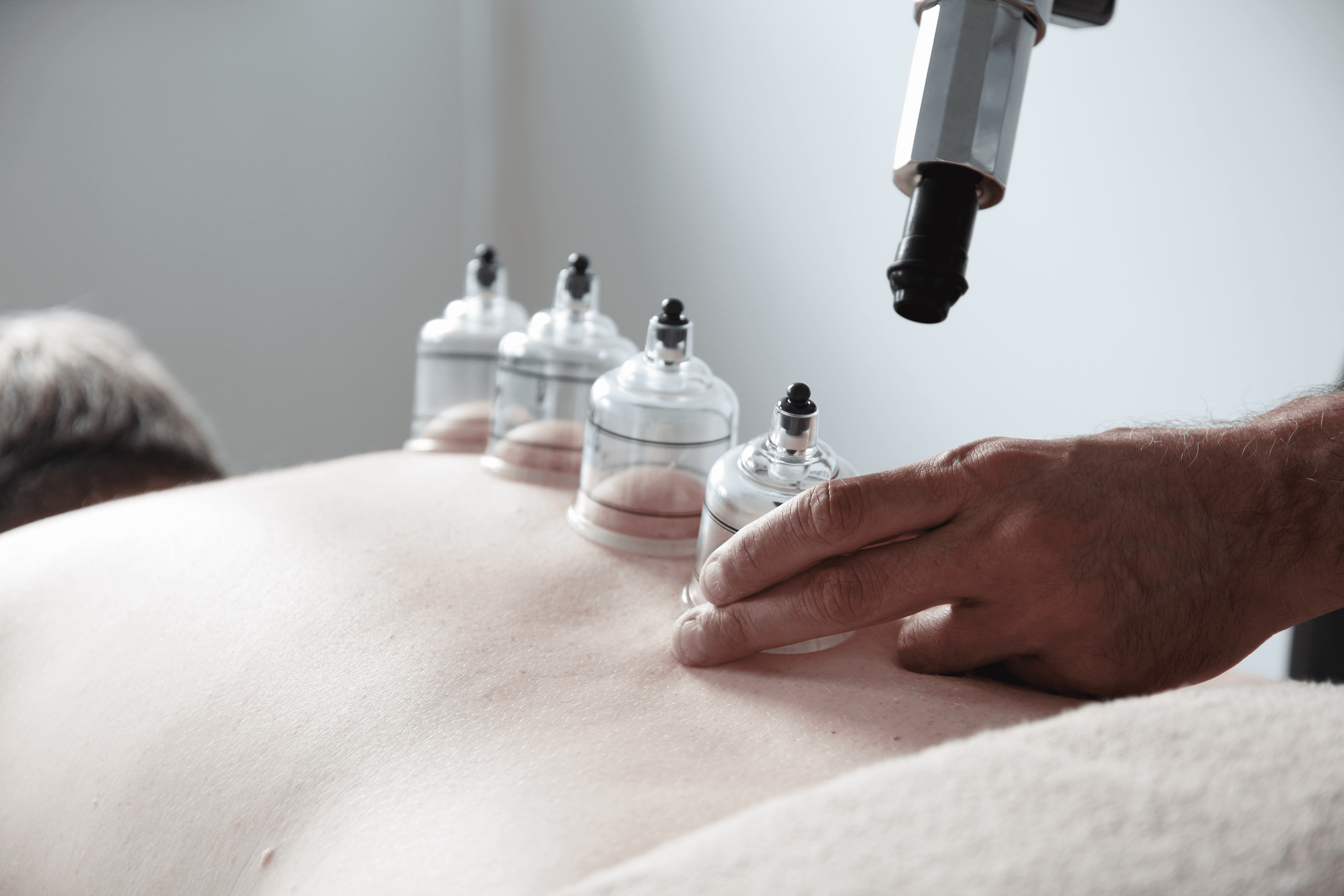
Cupping works differently from most hands-on treatment. Instead of pushing into the muscle, it uses gentle suction to lift the tissue, which can reach deeper tension that's harder to get to with direct pressure alone.
The effect is increased blood flow to the area and a softening of the tissue underneath, which can help ease stubborn tightness, reduce discomfort, and improve how freely the area moves. It's often useful for spots that feel chronically stuck, regardless of how much other treatment they've had.
I use cupping as part of a session rather than on its own, applying it where it's going to be most useful, usually alongside massage or dry needling, rather than as a whole-body treatment.
The sensation is a strong pulling or stretching feeling, which is quite different from what most people expect. It's not painful for most people, and once you've experienced it once, it tends to feel more comfortable than you anticipated.
Cupping often leaves marks on the skin: circular patches that can range from light pink to a deeper red depending on how much tension is in the area. These aren't bruises. They're a result of increased circulation to the surface and typically fade within a few days.
If you're curious about whether cupping might help with what you're dealing with, feel free to get in touch before booking.